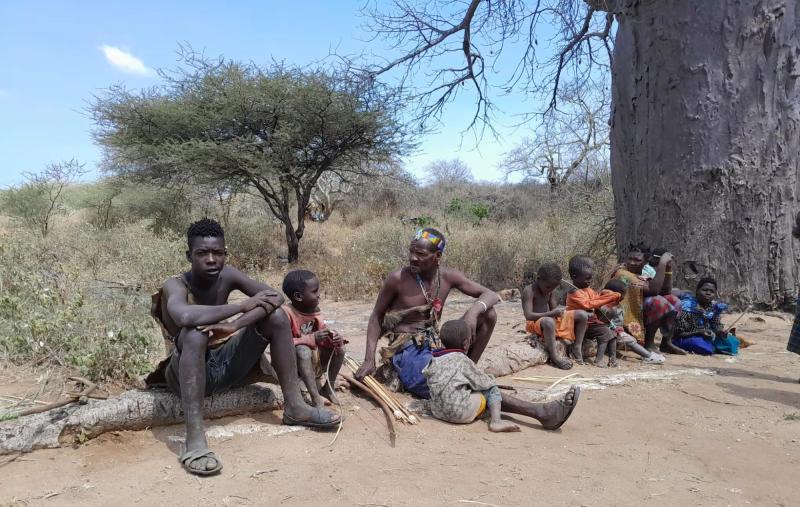
This is an investigation into a carbon credit project in Tanzania. The project allows US and European billionaires, tour operators and airlines to ‘offset’ their CO2 emissions with carbon credits from the Hadzabe, a group of hunter-gatherers in Tanzania who emit hardly any CO2 themselves.
Freelance journalists Janneke Juffermans and Marcel Hooft van Huysduynen scrutinise the carbon project. Documents from the project, and interviews with those involved, NGO staff and scientists, in Tanzania and abroad, show that while the project is a godsend for large and wealthy CO2 emitters, it is doubtful that it will benefit the climate and the Hadzabe.
Complaint by Carbon Tanzania Ltd. / M. Hooft van Huysduynen, J. Juffermans and the editor-in-chief of Trouw
In the article “Billionaires use hunter-gatherers to offset CO2 emissions. ‘A new form of colonialism’”, M. Hooft van Huysduynen, J. Juffermans and Trouw reported on possible abuses in the carbon credit project of Carbon Tanzania Ltd. (the complainant). The reporting on the complainant (and its project) was one-sided and misleading, partly because allegations were published without sufficient basis and without proper opportunity for the other side to be heard. However, no relevant, serious factual inaccuracies have come to light. The complaint is therefore partly well-founded and partly unfounded. The Council recommends that Trouw publish this conclusion in full or in summary.
Read the full conclusion of the Raad voor Journalistiek (Dutch Press Council).
Response from Janneke Juffermans and Marcel Hooft van Huysduynen
Firstly, we would like to point out that the Dutch Press Council has stated that there are no factual inaccuracies in the article. The Dutch Press Council did, however, state that the article, and in particular the characterisation of the carbon project as neo-colonialist, presents a one-sided and distorted picture. This is the opinion of the Dutch Press Council. We do not share that opinion.
The characterisation was included in the article with due care. It comes from a local activist who is well acquainted with the local people, human rights issues, and the carbon project. We have not disclosed the source’s identity because activists in Tanzania cannot work safely – the country is a dictatorship and the regime is generally favourable towards foreign investors in carbon projects.
The idea that carbon credit projects have a neo-colonial character has been circulating for years outside the carbon credit sector itself and the governments that support it. We believe we have described sufficient facts and circumstances to justify including this in an article about the project in question.
Read their full response via MO* (Below in Dutch)