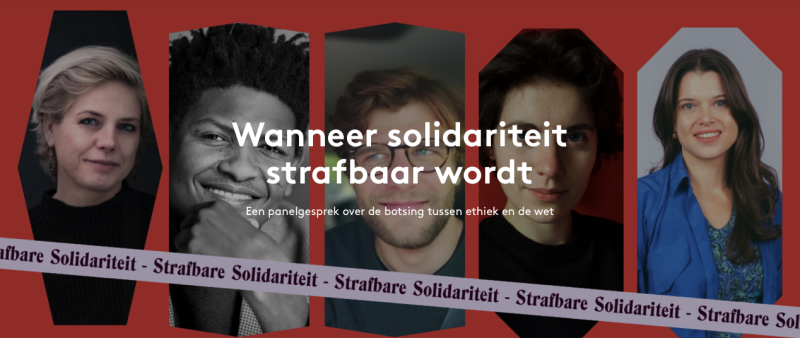
Her support for local residents and climate activists led to her arrest and the temporary confiscation of not only her belongings, but also her clothing. In this essay, she writes about her own experiences and how they relate to the risks faced by climate activists and their supporters.
When helping migrants becomes a crime
Every night, two groups patrol the Alps around Briançon: the border police and aid workers. The police try to stop refugees who want to cross the border here, forcing them to take dangerous routes. Anyone who helps the refugees risks arrest, fines and harassment.
The aid workers who are not deterred by this do everything they can to help refugees in need. This is not always successful: since 2018, sixteen migrants have died or gone missing in the Briançon passes.
Furthermore, this is not purely a French phenomenon: it is part of a broader European trend to obstruct and prosecute humanitarian aid workers.
Ode to obstruction
In response to a column by Mark Elchardus, who calls protests against ICE operations anti-democratic, Suzanne wants to make it clear that democracy goes far beyond the ballot box. Constitutions and human rights limit what a majority can decide — undocumented migrants are also people with fundamental rights, and no election result can simply override that. Those who accept dehumanisation as routine allow that boundary to shift a little further each time. And if any boundary needs to be guarded, it is precisely this one.
Abortion activists are getting smarter
Are we witnessing a resurgence of backstreet abortionists operating in squalid back rooms? Strangely enough, no. Thanks to the international network that provides effective help to women with unwanted pregnancies — often even entirely legally.
Photo: © Vincent M.A. Janssen